Podcast: Download (Duration: 1:01:20 — 56.2MB)
Subscribe: Apple Podcasts | Spotify | Android | RSS | More
The Sustainable Hour no. 616 | Transcript | Podcast notes
Too much fresh water can kill a saltmarsh. At the Karaaf Wetlands near Torquay, stormwater from housing estates is keeping parts of the marsh too wet for its salt-tolerant plants to survive. The Karaaf is one of seven wetland areas left out of the recent Ramsar expansion.
In The Sustainable Hour no. 616, broadcasting from Wadawurrung Country, Tony Gleeson and Mik Aidt speak with Andrew McCauley, convenor of Amplifying Voices for Nature, about what is at stake for the wetlands on our doorstep.
Four of the eleven wetland areas considered in the review were approved for addition to the existing Port Phillip Bay (Western Shoreline) and Bellarine Peninsula Ramsar site. The expansion brings stronger protection to about 1,400 hectares at Moolap, Edwards Point, Lake Connewarre and Point Cook Cheetham, including feeding and resting grounds for shorebirds that migrate thousands of kilometres.
The Victorian Government says the Karaaf fell short of the listing criteria. Andy wants the government to publish the detailed assessments behind its decision. He argues that one authority with dedicated funding should manage stormwater across the region.
Ahead of the Victorian election on 28 November 2026, his group is asking candidates to back a fresh assessment of the seven wetlands.
In the ‘Be’ segment, Andy urges listeners to get involved through a local group or start a conversation at their children’s school. Tony puts it simply: ‘Be a participant.’
→ Read more about Andy McCauley, the Karaaf Wetlands and Amplifying Voices for Nature:
amplifyingvoicesfornature.com.au
. . .
SOAPBOX
In his soapbox, Mik looks at whose names end up on Geelong’s street signs. A council audit found that just three per cent of places were named after women. The council voted seven to four for a new policy that gives priority to women, First Nations people and underrepresented cultural groups in future naming decisions. Drawing on his book ‘Man of Earth’, Mik links resistance to the change to a model of masculine power he also sees in Trump’s ‘drill, baby, drill’ politics. What would public leadership look like if it began with listening and care?
. . .
GLOBAL OUTLOOK
In his global roundup, Colin Mockett OAM covers the opening of COP31 in Antalya, Australia’s role in leading the negotiations, and the US lawmakers heading to the summit after the Democrats’ midterm victory. He also looks at Brazil’s roadmaps for moving away from fossil fuels and halting deforestation.
. . .
NEW SONG
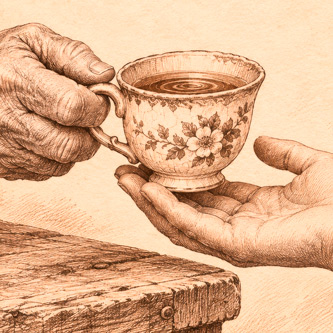
– A song about how care ripples outwards – from neighbours sharing tea after a blackout to young people planting mangroves and inspiring others to do the same.
The Hour closes with our original song ‘Take Action for Earth’ about the critically endangered swift parrot and the tree hollows it depends on to breed in Tasmania’s forests.
→ You can listen to more than 70 songs from The Sustainable Hour on www.climatesafety.info/music
“We’ll be asking all the candidates, and there’s six electorates that we’re covering, to let us know what they think of the various propositions that are on our website, which are saying we want all seven to be re-evaluated and we want an explanation. If something’s going to be excluded, the detailed analysis should include detail so that at least we can argue and we can get a public debate about it. These reports that this was based on should not be unpublished. They should be public documents. It’s all this secrecy nonsense that stops and frustrates”
~ Andrew McCauley, convenor of Amplifying Voices for Nature

→ Subscribe to The Sustainable Hour podcast via Apple Podcasts or Spotify
. . . . . . . . . . . . . . . . . . . . . . . .

We at The Sustainable Hour would like to acknowledge the traditional custodians of the land on which we are broadcasting, the Wadawurrung People. We pay our respects to their elders – past, present, and emerging, and extend that respect to all First Nations people.
The traditional custodians lived in harmony with the land for millennia, nurturing it and thriving in often harsh conditions. Their connection to the land was deeply spiritual and sustainable. This land was invaded and stolen from them. It was never ceded. Today, it is increasingly clear that if we are to survive the climate emergency we face, we must learn from their land management practices and cultural wisdom.
True climate justice cannot be achieved until Australia’s First Nations people receive the justice they deserve. When we speak about the future, we must include respect for those yet to be born, the generations to come. As the old saying reminds us: “We do not inherit the Earth from our ancestors; we borrow it from our children.” It is deeply unfair that decisions to ignore the climate emergency are being made by those who won’t live to face the worst impacts, leaving future generations to bear the burden of their inaction.
“The Indigenous worldview has been marginalised for generations because it was seen as antiquated and unscientific and its ethics of respect for Mother Earth were in conflict with the industrial worldview. But now, in this time of climate change and massive loss of biodiversity, we understand that the Indigenous worldview is neither unscientific nor antiquated, but is, in fact, a source of wisdom that we urgently need.”
~ Robin Wall Kimmerer, weallcanada.org
. . . . . . . . . . . . . . . . . . . . . . . .
. . . . . . . . . . . . . . . . . . . . . . . .
OXFAM:
The super rich are destroying our climate. But we don’t have to let them.
| As the COP31 global climate negotiations kick off today in Türkiye, Oxfam’s new report shows that Australia’s richest 0.1% produces 31 times more carbon pollution than poorest half of the population. And they’re profiting off their destruction. Australia’s coal, oil and gas corporations made $467 billion in 2024-25, yet paid just 3% corporate income tax. That’s around 8 times less than the 23% income tax paid by the average Australian like me or you. Does this make you angry? Us, too. That’s why we’re demanding the government make big corporations, and their wealthy investors, pay their fair share. By making big polluters pay, the government can invest more in action on climate change at home and in our region. You can email the Climate Change and Energy Minister Chris Bowen in one click and strengthen our call. Email the Minister The deaths and displacements caused by climate pollution aren’t impacting the super rich. They’re hitting the low-income countries and communities who have done almost nothing to cause the escalating climate disasters. In the coming days world leaders will meet at COP31 to discuss the climate crisis. It’s a key time for us to act. We are calling on the Australian Government to: Make big coal, oil and gas corporations pay for their climate damage through a pollution levy Commit to an international climate finance goal of at least $11 billion between 2026-2030 Stop approving new coal and gas projects and reduce its pollution by at least 75% by 2035 Listen to the voices of climate change-affected groups in climate negotiations By emailing our Energy Minister Chris Bowen before then, you can make our demand impossible to ignore. Email the Minister  In hope, Josie Lee Policy and Advocacy Lead, Oxfam Australia |
. . . . . . . . . . . . . . . . . . . . . . . .
. . . . . . . . . . . . . . . . . . . . . . . .
TRANSCRIPT
of The Sustainable Hour no. 616
António Guterres, United Nations Secretary-General: (00:00)
Humanity is speeding past the limit to avoid climate catastrophe.
Jingle: (00:14)
The Sustainable Hour. For a green, clean, sustainable Geelong: The Sustainable Hour.
Tony Gleeson: (00:24)
We’d like to acknowledge that we’re broadcasting from the land of the Wadawurrung people. We pay tribute to their elders – past, present, and those that earn that great honour in the future. We’re broadcasting from stolen land, land that was never ceded. Whilst living on and nurturing both their land and the communities for millennia, the Wadawurrung people, acquired a great amount of ancient wisdom, the same wisdom that we’re going to need access to to survive the climate crisis that we’re facing.
Mik Aidt: (01:09)
To care or not to care. That’s the question.
Do we care? Or should we care? Why should we care?
Now according to an audit in Geelong Council, only three percent of places in Greater Geelong are named after women. Do we care? Should we care about that?
There’s been some discussion in council about it because the 11 councillors there were asked to have a look at this. There was a proposal to introduce a new place naming policy which quite straight-forward was about starting to give greater recognition to women and also to First Nations people and other underrepresented cultural groups. So what they proposed was that when a new place should be given a name, like a new street or a square, women or First Nations people or First Nations people who are women would all of a sudden be first in line to be considered.
And to my surprise, there were councillors who couldn’t care less. So they stood up and said they were opposed to this new idea. Not surprisingly, of course, they were men.
Councillor Eddy Kontelj said it very straight-forward that he thought that a new policy like that “was attempting to solve a problem he personally didn’t believe actually exists.” He did not see that imbalance as a problem that some of his fellow female councillors had told him that they were actually quite concerned about this, maybe even upset, that only three percent of places in Greater Geelong turned out to be named after women. And the bigger problem here is: he didn’t care.
This was not just a place name problem in a council, it goes a lot deeper than that. First of all, when we live in a society where around 51 percent of the population are women and girls and only three percent of places are named after women, well you might say that we’ve got a problem. But who is it a problem for? Why should I as a man even care about it? We men rule the world, right? We certainly have done, historically, so obviously the names of our places and streets reflect that. That’s just how it is. Men have been sitting on the important positions in society, in politics, in science, in business and so on. So places of significance obviously would be named after important people. Equal: men.
But the thing is, something is in the process of changing. And if you as a man haven’t noticed, well, you’re lucky now! Because if you stay around here for the next 10 minutes or so, I will get you up to speed with this new development. Ladies and gentle men: that is my soapbox.
But before I get too overheated and excited here, first of course it’s time for some news from around the world as we always begin The Sustainable Hour with Colin Mockett OAM who is ready – I hope, Colin? – with his global roundup.
COLIN MOCKETT’S GLOBAL OUTLOOK: (04:52)
Thank you, Mik, and our roundup this week begins of course in Antalya in Turkey, where COP31 began on Monday. There are somewhere between 70,000 and 80,000 attendees at the conference, including at least 20,000 lobbyists from the fossil fuel industries.
Their intention will be as always to make sure that oil keeps pumping and gas and coal keeps burning around the world. But word from the conference this year is that the environmentalists may just outmaneuver them by concentrating on persuading nations to electrify their transport and industries rather than trying to get them to give up fossil fuels.
Now that’s very much down to Australia’s environment minister, Chris Bowen, who’s in charge of the conference agenda. In some ways this is good because as an Australian Labor government minister, he’s got plenty of experience negotiating with fossil fuel lobbyists. But he did start with a handicap, in that the weekend before the COP opened, his own government figures released showed that CO2 emissions from Australia’s exported fossil fuels have doubled in the last ten years.
[Editor’s note: Chris Bowen is Minister for Climate Change and Energy and COP31 President of Negotiations. ABC’s calculation for Australian coal and gas burned overseas rose from 681 million tonnes in 2005 to almost 1,200 million tonnes in 2025 – about 76 per cent over two decades.]
One late surprise at the COP31 will be a group of delegates from the United States, because one day after the US midterm Democrats’ landslide win, the Democratic Party announced that despite President Trump’s withdrawal from the Paris Agreement, 19 US Democratic lawmakers would be attending COP31 and they would be seeking what they termed renewed diplomatic engagement. They can’t be official, of course, because they’re just representing the party, but at least the US is back at the COPs, called the US Congressional Delegation.
The group is led by the Sustainable Energy and Environment Coalition Institute. Its members plan to meet with the world’s policy makers, civil society groups and the business leaders at COP, with its discussions exploring opportunities for renewed US engagement on climate, energy and economic policy. In other words, never mind ‘drill baby drill!’, it’s ‘we’re back, baby, we’re back!’
And in the US itself, that midterm election result delivered a strong rebuke to President Trump and his party and his politics. At the time, it said that the election result had laid bare voters’ deep frustrations over high prices, the Iran war, and concerns over government corruption. As a direct result, stocks of global renewable companies were value increased as the results came in, giving that the outcome will be seen to support more favourable policy for the industry going forward. But stable, sensible writers were much more cautious, saying that the revival of Americans renewable and the environmental industries was unlikely to happen overnight.
One climate activist warned that since Donald Trump’s re-election [in November 2024 and return to office] in January 2025, his policies didn’t just dismantle the nation’s environmental policies, they took a sledgehammer to them, and it would take months to repair the damage. The Trump presidency didn’t just dump policies, the Climate Weekly reported. They dismantled the structures and changed personnel to anti-environmentalists.
But the elections couldn’t have been more positive for the environmental movement. As one report noted, voters sought action on energy costs, corruption, and data centres in an election environmentalists believe sets the stage for renewed climate policy.
According to Carbon Brief’s Grist column, the election results were most significant for climate action, noting that many Republican seats had elected Democrats for the very first time in living memory. Now that’s not a swing. It’s a huge movement for change, it said.
Now to Brazil where the newly re-elected [Luiz Inácio Lula] da Silva government last week released a global roadmap to help countries wean their economies off of oil, gas and coal over the next decade. Now that’s according to reports in the Bloomberg Press. The report says that Brazil had committed to produce the roadmap after hosting last year’s COP 30, but had waited until the run-up to this year’s COP 31 to release it.
It says the roadmap had three phases, but only the last of which from 2031 looked at how to curb fossil fuel supplies. Separately, Brazil’s climate home news released a deforestation roadmap which said the global aim to halt deforestation by 2030 remained within reach using existing national and international tools.
But it requires a faster pace and more finance. Reuters noted that shifting away from fossil fuel and reducing deforestation are considered essential to meeting the Paris Agreement’s goal of limiting global warming. And the Guardian quoted Professor Joeri Rogelj from Imperial College London as saying that the roadmaps are valuable, but not fall short of clearly indicating a pace of change that’s needed.
And finally the world’s most environmental sports club, Forest Green Rovers, couldn’t contribute to this week’s good news stories. They lost 2-0 away to Luton Town [in the FA Cup first round] and remain in 16th place out of the 24 teams in the English National League ladder.
. . .
Jingle: (11:42)
Listen to our Sustainable Hour – for the future.
Mik: (11:48)
Before we introduce today’s guest, allow me to elaborate a little bit more on what I was saying there about Geelong’s new place name policy.
So in Geelong the other week, Councillor Andrew Katos expressed concern that with this new policy, for instance a deserving Anglo-Saxon man might be passed over. That concern doesn’t travel in both directions in Mr Katos’ world. The possibility of overlooking one deserving Anglo-Saxon man should actually sharpen our interest in all the many deserving women who’ve been overlooked.
A real man would say “I hear you, I can see this concerns you. So even though I don’t have that same concern, I’m going to support you in this. Because I care. I care about you, and I care about my community, and I want my community to feel heard. That we listen”.
That principle of caring requires us to ask ourselves some questions about who gets recognised for what. Whose contributions were the previous generations willing to recognise? Caring, for instance, that was not something that was recognised.
If you go a hundred years back, all the work that the women were doing barely entered any record. She kept people fed, she raised the children, she cared for the neighbours, she held her community together. Meanwhile, her husband would receive a title and an honour and all the public thanks and recognition in the newspapers.
Go another 50 years further back, like 150 years ago, women weren’t allowed to own a property or to vote in politics. It was in 1884 that married women gained property rights here in Victoria.
And those men who back then were treating half of the population as their property and as servants, they have a name, they are called patriarchs. And their system of oppression is called patriarchy. And when you begin looking into what’s really going on in politics, you’ll notice that opinions and decisions often actually have nothing to do with whether you are on the left or on the right side in politics, whether you are a greenie, or a socialist, or a conservative, or whatever you call yourself. No. It’s that old patriarchy that sticks its face up and messes with our decision making.
I was writing on a book about masculinity recently, and I realised I really needed to find out more about these patriarchs. Because we’ve become so familiar with that system that we’ve stopped recognising it. Where men just experience it as that’s the natural order of things.
So when somebody suggests ‘maybe we should change it’, they suddenly perceive that as being unfair. Like, oh, why should we favour women or indigenous people while the men are being pushed aside? But if you look into the history of how women have been oppressed, actually, it was really brutal.
One object that I stumbled into when I was doing this research was this thing called the ‘Scold’s Bridle’, which is like an iron framework that you would put around a woman’s head with a piece of metal sticking into her mouth, so that you know you suppress the tongue. And this bridle was used back in the 1600’s to punish and to publicly humiliate women whose speech was judged by the men as ‘difficult’ or ‘troublesome’. So if a woman’s voice was considered a problem, the authorities thought they could solve that ‘problem’ with iron and public humiliation.
That’s history. That bridle has been put in museums now. But we are only 12 generations further on. And women still have to struggle for their right to speak. It’s only like five-six generations ago that a woman was not allowed to study, or to enter a profession, or to participate in decision making. These male councillors in Geelong may long have forgotten about that, but the women haven’t.
And something similar applies to the languages and knowledge of the first peoples in this country. The places in the landscape here had a history long before Europeans showed up and began putting names on maps. When the council in Geelong was discussing this, Councillor Emma Sinclair spoke about her learning Wadawurrung place names and gaining a deeper understanding of the land where she lives. And there’s something real and something generous in that. Learning another name is part of enlarging our knowledge of the place where we live, and that community where we belong.
I’ve seen so many politicians and councillors who have felt empowered by this manhood self-entitled way of moving in the world that Trump has shown the world – president Trump in the United States of America.
And over in America they’ve had a quite loud discussion about masculinity and the power of men. I mean, we have a recording from 2005 where you hear Trump say ‘kissing women without waiting and just grabbing them between their legs is fine because when you are a star they let you do it’.
Well, Trump told the media that he saw Jeffrey Epstein as a terrific guy, right? And let’s just be clear about who Jeffrey Epstein was. A serial sexual predator who used underage girls. A wealthy and powerful man who treated girls’ bodies as commodities that he could buy and use. And Trump thought as he said to the New York magazine in 2002, that he’s a ‘terrific guy’.
Trump who brought the ‘drill baby drill’ attitude to the world and inspired a wave of petro masculinity that we now see men celebrating around the world. ‘Burn baby burn’.
What Trump has done really, as I see it, he has split the world up in two camps. There’s those who care and there’s those who don’t.
And those who don’t, well, I call them ‘Trumpists’. And when someone tells me that he doesn’t think that when council finds that only three per cent of places in Greater Geelong are named after women is actually a problem. Or tells me that climate is a hoax or, you know, at least it’s not something we should deal with, that’s localised Trumpism. Right there.
Trump: (18:49)
We will drill, baby, drill.
Mik:
And yes, I admit I stand here on my soapbox, claiming that there’s a straight line between Trump’s view on women and his attitude towards destroying nature as long as there’s a profit to be made. Masculinity, patriarchs, and squashing of women and nature, and using money to acquire power, and using fossil fuels to make money. There’s a connection there that we don’t hear about. There’s dots that need connecting. And that’s actually what I wrote that book about.
But when women want a slice of that recognition cake. Ooh, then it’s too much of a challenge! And similar with the green energy transition, which is also, you know, something that petrol loving men and the patriarchs resist because it challenges that story that they have been living their lives by about their own importance and how they control others.
The patriarchs have been raised in this understanding that strength is something men have to demonstrate through conquest. Men conquer women and conquer the living world. It’s all supposed to be just available for us to command.
And there’s another word for that, that’s entitlement. When you live in a world of entitlement, well, it can be very difficult to see what life outside your own world looks like. Like, when you hear a councillor saying, ‘I don’t believe the problem actually exists.’
What I’m talking about here that’s been happening in America, it matters to all of us all over the world. President Trump has been spreading this gospel that lying and cheating and bribing and bullying your way to power – that’s fine. Domination and violence, ‘that’s just the story of humanity’. Not to care about how other people feel. Not to care about what happens when the living world, nature, the ecosystems, the climate collapses.
But here’s the news for you, all you Trumpists of the world who speak your ‘I don’t care’-stories in council chambers, in town halls and in parliaments. I have news for you, because the Trumpism is about to end. What we saw with the midterm elections in America was a very clear indicator of that. Trump’s era, his not-to-care era, has reached its tipping point, and now a new story is being built.
And men, in particular grey-haired, entitled men who sit there and feel important in their positions of power, and who have learned not to care about how others feel, well, I would say you’d be wise to take notice because your era is also about to come to an end. Your lack of empathy, your lack of care, your pride in being a patriarch. It’s outdated and people, the voters in your community, are getting sick and tired of it. Sick and tired of being bullied and manipulated, lied to, and ignored. Tired of this Men’s Club attitude.
So what I’m talking about is that if you want to have any relevance in the world that is about to come, you need to learn or to figure out how to care. Caring is not just something for the women. Caring is a winner for everyone.
I would say real strength for a man is to be gentle and caring.
And if a woman speaks up and says there’s something happening here that she’s not comfortable with, then as a man, you listen, you care, and you take it seriously.
Eventually, in the Geelong Council, after much man-woman squabble-bubble, they had their vote on the policy, and seven voted for it and four against. So, now Geelong has a new naming policy – which then is going to be reviewed after two years.
And you may say that’s a modest opening, but it’s actually a real opportunity. An opportunity to start examining these deeper questions that I’ve been mentioning. And okay, let’s see how it works, and whether there’s anyone other than these four men in council who will be protesting when a place gets named after an Aboriginal person or after a woman.
We men need a new story in decision-making and in councils and government. We need men who are able to listen.
We need that just as well in families and in friendships in our workplaces, but in particular in public life. And a street sign will accomplish just a tiny part of that, of course, but it’s a recognition within a larger responsibility to care for one another.
Public names tell a story about what kind of community we are – what values we have.
And imagine if you ask, ‘That street, who was that named after?’ And you find out, it was named after a woman who spent her entire life serving others, serving her community, being in service to life.
William Lyon Mackenzie King, Canada’s prime minister, in a radio address on 3 September 1939, the day Britain declared war on Germany: (24:13)
“Unite in a national effort to save from destruction all that makes life itself worth living”.
Mik:
That would be a story worth making everyone know about.
So thank you to Councillor Elise Wilkinson and Emma Sinclair in particular for speaking up for this place policy and a fuller account of who belongs in Geelong’s public memory.
That’s just one small step in this big journey towards a more life-affirming world where we make different choices now – because we care. Because we don’t squander the natural world. And we don’t accept this patriarchic ‘not caring’ as a standard any longer. Young and old, we’re moving away from this patriarch system to something that’s more fair and kind and is about relations and caring.
And as I started with saying, it boils down to that one thing at the end of the day:
To care or not to care? That is the question.
Not only when it comes to street signs, also in our private lives, but most certainly when we step up to positions of leadership in our community.
To care about your community… That’s for instance to pick up a piece of plastic that’s flying around on the pavement. As humble as that may look, that’s what leadership looks like.
Or to ask a neighbour who lives alone if they would like to come over for dinner. That’s what care could look like. Or someone who organises a BBQ for the entire street.
Or when people realise they have to stop buying machines and vehicles that run on petrol. Because we can get electric ones now that don’t pollute the air. We can run our houses without being part of a system that doesn’t care that we’re warming up the planet and we’re wrecking the future for our children, the world that they are going to live in.
When we care, we’re conscious of our carbon footprint. That’s caring for our kids and for our community, well, you could say for humanity. That’s caring for the poorest and the youngest people on this planet, who are paying for a climate crisis that they didn’t even create. We created it together.
And because we care, we are going to clean it up. We are going to clean up after ourselves. So that is the big C in our life: caring. Together with Community and Curiosity. The three big Cs that I believe will become more and more important in the time to come.
And actually when I think about it, I’ll take that question back, to care or not to care, because that’s not the question. There is only one clear way forward for us and that is: to care. Without question. To care is to show leadership. We are going to win all the things that make life worth living – because we care.
. . .
SONG:
‘Because We Care’
Verse 1:
When the lifts went still in our block of flats
A girl took the stairs with a torch and a flask
She sat with the man who lived alone
Till he’d heard his daughter’s voice on the phone
At dawn he brought his good cups down
We dragged a table out and passed them round
Bridge:
We care about the atmosphere
and keep the rivers running clear
We protect the life that we hold dear
So kids can grow up with nothing to fear
Chorus:
The water flows
Because we care
The circle grows
Because we care
We protect the air
Because we care
We’re ready to share
Because we care
Verse 2:
A student puts a hand in the air
‘What would we build if we started with care?’
In the wetland at the turn of the tide
young hands plant mangroves side by side
They make a film – and it crosses the sea
A girl on the other side says, ‘This is for me!’
Before the rains, she’s got a crew of her own
and a clip of the first new leaves on her phone
Bridge:
We care about the atmosphere
and keep the rivers running clear
We protect the life that we hold dear
So kids can grow up with nothing to fear
Chorus:
The water flows
Because we care
The circle grows
Because we care
We protect the air
Because we care
We’re ready to share
Because we care
Rap intermission:
The lies go deep where the old boys’ lead
Boy, ‘man up’! Just get what you need
‘Drill, baby, drill’ – make a virtue of greed
The Earth is a thing you can bully and squeeze
She tells you it hurts, you tell her she’s wrong
The river’s gone dead, you say: Just move along!
Kids are crying – who cares, this is fun!
We call climate a hoax and pretend we’ve won
Instrumental passage
Bridge:
‘To care or not to care’, was never a question
I’ve got two hands, and I’ve decided to join
I knock at the door, a light is turned on
A voice says, ‘Welcome! Just step right in!’
Final chorus:
The water flows
Because we care
The circle grows
Because we care
We protect the air
Because we care
A system that’s fair
Because we care
Spoken words:
We are going to win all the things that make life worth living – because we care.
. . .
Tony: (27:21)
Our guest today is Andrew McCauley. Andrew is the convener of the group called Amplifying Voices for Nature. Andy, thanks for coming on this morning.
Andrew: (27:36)
Welcome.
Tony:
It’s much appreciated. Okay, so let’s start with what is “Amplifying Voices for Nature” and why was it established?
Andrew: (27:46)
Look, Amplifying Voices for Nature is a group of, if you like, environmentally focused organisations around the Bellarine and the western shoreline of Port Phillip Bay. They’re really focused on the wetlands of this area. We’re an ecological powerhouse. I mean, it’s an amazing region. We’ve got a Ramsar site, which is a site of international significance for all these birds that fly around the world. It’s an extraordinary site. But we’ve also got two marine national parks and six marine sanctuaries. I mean, the region is very special from an environmental point of view.
It’s also been one, two, and three of the fastest developing areas in Australia. I mean anybody that’s been down here will see that the area has got massive development occurring. So we’ve got the conflict between, if you like, development and environment occurring down here.
And this group particularly was interested, you know, I’d started off with the Karaaf wetlands that backs on to the area I live in being swamped by the stormwater from North Torquay. Torquay is has a massive development happening all around it, but North Torquay grew out of a farming area and the fresh water or the storm water from North Torquay has been flowing into the Karaaf Wetlands, which is a salt marsh.
Now, the salt marsh gets rained on like everybody else. But the thing about a salt marsh is that it needs to dry out at least for three months a year so that the salt tolerant plants that all these birds fly over to eat can survive. And I mean the Karaaf’s just been you know, it’s been going on for 20 years. But now what’s happened is we were fighting for what we call Ramsar status.
And the reason you want Ramsar status is it gives you serious protection, legal protection. And it’s the federal government, you know, at the Australian government signed those global agreements because they wanted to make sure that the birds that circulate round the globe to you know, a lot of these birds fly 13,000 kilometres to get here. And they eat this salt tolerant plants.
Plants that grow on those. So if they’re not here, the birds are dead. So what the generics of this group, we started off pushing for that Ramsar status and that the it was all going well, you know. So we we were part of a group back in 2019.
The MEGOS Committee, I’m calling it [the Menkhorst panel at the Arthur Rylah Institute]. It’s part of the state government’s environmental department. Their specialist area was the Arthur Ryler Institute. That’s their research division. And these are world-leading both bird and plant experts that spent two years identifying areas that could be added to the existing Ramsar site down here that were point.
And in 2019 they established there were 15 sites around the Geelong and or the western shoreline of Port Phillip Bay and the Bellarine Peninsula that could be added that met Ramsar requirements, which are incredibly rigorous. So they came up with 15. That was 2019. Four years later, another committee was formed, and this was a normal part of the process. The timelines are appalling. And it was made up of the land managers and the waterway managers. So these are the groups that are responsible for managing each of these sites. And some of the sites are difficult to manage because they’re privately owned or access is difficult. I don’t know. I’m sure there’s lots of other excuses that can be brought up.
Anyway. That committee came out in 2022 and recommended eleven of the sites to be added to the existing Ramsar site. Then every one of these was important. In between that, the community was consulted, so which is again a normal part of the process to make sure that they supported these particular areas.
The CREF got 98 per cent support. That’s almost unheard of. Every other group got about 76 per cent. Again, everything’s going ahead, so we’ve got to there. We thought, right we’re home. We’re gonna end up the state government’s got to recommend to the federal government, but it’s almost the hard work’s done in the state. And the feds then gotta send it over to Ramsar, but it but all of that is almost automatic. The difficult parts down here. So they’ve recommended four. So they’ve knocked off seven of them, and in what they called a detailed analysis, which was a three-page report with no detail in it and nobody signed it, they recommended only four. Now they were four important sites, but they left off seven really important sites, including the Karaaf Wetlands.
So we were fairly upset about that. I mean and there’s a huge amount of groupings all around the Bellarine that either they look after specific sites, either land or water that, you know, there’s Land Care managers that are out there weeding or pulling out weeds that aren’t meant to be there or they’re looking after measuring the quality of the waterways.
And when you add them all up, there there’s a huge number of people committed to try to work in this region to maintain these these so I suggested to them that their Facebook pages and their websites and there’s a massive communication platform. So I said, let’s start sharing stories. So that’s what you’ll find on on the Amplifying Voices for Nature website.
It’s the stories about each of these wetlands, and a story about the ballerina’s a unique source, and a story about this appalling process, where the science was completely ignored, then the land manager’s recommendations were ignored, and
It was the classic case which happens to people like us all the time, the outsiders, where, you know, you it’s I call it the absorption method. So you smiled at, everybody sort of agrees with you, you know, yeah, that’s nice. Good to hear your information. Never get an argument, never get a disagreement, never told anything, and you’re just informed when a decision’s made, womph. you know, we we missed seven.
Mik: (35:15)
I’m surprised, Andrew, to hear this because all I have seen in my social media stream was, as you say, the smiling faces of ‘we now have four Ramsar sites’ [four wetland areas were approved for addition to the existing Ramsar site] and a group of people very proudly explaining about the importance of that. Not a word about what you’re saying.
Andrew: (35:32)
Yeah. Look, you know, this is the PR machine that is our politics. I mean what happened was it was a cost shifting thing. I mean I’ve got we we we had the Karaaf Wetlands managed by Parks Victoria. Now at one end we’ve got a caravan park operator, GORCAPA. Now they do a lot of good stuff. Their income is from the Torquay caravan parks and the caravan parks they manage.
And their objectives are to increase tourist numbers. But the Karaaf Wetlands needs professional work. They haven’t got the technical expertise. They’ve got that the they’ve got people pulling out weeds and they’ve done some work. So I’m not but there at this end, in the middle we’ve got Parks Victoria, who haven’t got any staff left anyway, but they’re trying to look and then on the other side of the Breamlea Road – We’ve got Bilroin but not Bilrain, there there’s another caravan park operator. But the same thing, well intentioned.
But haven’t got the technical skills or depth. But all of a sudden you’ve got free organisations and it’s cost shifting. All it’s doing is so instead of in Point Parks Victoria stuff, you tell you’ve got the income from the caravan parks and you’re just responsible for all this extra stuff that used to cost us money. Now we’ve saved money. Isn’t that wonderful? You know, saving the wetlands? you want that – too demanding?
Mik: (37:05)
So what’s going to happen to the seven sites that were not declared Ramsar sites? What will happen now?
Andrew: (37:12)
Look, we’ve got a Victorian State election coming up and we’ve got a very volatile electorate. So we’re we’re putting our case for making nature more important. I mean, this isn’t the only issue. We’ve we’ve lost 70 compliance officers from our marine. The compliance officers used to catch the abalone poachers and all that sort of thing. Now we’ve got four education officers replacing them. Well, I’m afraid the abalone poachers aren’t necessarily looking for detailed education about it’s… you know, those are important things.
I mean, we lose such important assets and if you’re talking about what we’re leaving our kids, well, it’s being vastly depleted. So it’s important so we’re hoping that we can raise the profile of nature during the election and hopefully the voters will take notice of that when they choose who to vote for.
And we’ll be asking all the candidates, and there’s six electorates that we’re covering, to let us know what they think of the various propositions that are on our website, which are saying we want all seven to be re-evaluated and we want an explanation. If something’s going to be excluded, the detailed analysis should include detail so that at least we can argue and we can get a public debate about it. These reports that this was based on should not be unpublished. They should be public documents. It’s all this secrecy nonsense that stops and frustrates.
You know, activist groups and and there’s thousands of activists around those regions. And you you you pull your hair out, sort of saying, Well, why? You know, what happened there? You know, we’ve just found out that Barwon Water has decided that stormwater is too difficult to manage in this integrated water management for this whole region. And stormwater’s causing such damage to those groups, but, so they’re going to use recycled water, now that’s great. And they’re gonna upgrade Black Rock from B grade to A grade, that’s great. But they’ve ex… it’s stormwater’s too hard. Well, sorry. I want to know why that might be the case, but there’s no explanation.
Tony: (39:53)
We’re listening to Andy McCauley at the moment. Andy is the convener of the “Amplifying Voices for Nature” group. And we’ve been covering the lack of a systemic approach to wetlands in the in around Geelong and the Bellarine. So Andy, what would you like our listeners, you know, what can we do to help with this this massive issue?
Andrew: (40:20)
Well, look, I think if you go to the to the website which is www.amplifyingvoicesfornature.com.au we have a series of requests that we’re putting to each of the candidates, you know. Would you support, would you, and when our objective is to try to raise the profile of nature, it’s important, bloody important to the people who live down here and to put and obviously to the birds that visit.
We’ve just got to get it back on the agenda. It’s there’s such a focus on development, and that’s important too, but we’ve got to be so careful that we get everything on the table when we, you know, there’s pluses and minuses, nothing comes for free. So you can’t expect to share the access to nature that we had. But if we’re gonna deny it or remove it, we’d better be bloody aware of exactly what we’re doing and protecting it to the greatest extent that we possibly can. And secrecy and hiding information doesn’t help.
Mik: (41:36)
Isn’t the real deep issue here, Andy, that building a new village, a new extension of Geelong generates jobs and money. And there’s maybe even money sifting from one person to another, you know, as we pat each other’s backs and all that. Whereas keeping it as it is, so that the birds can be there, there’s no money in that.
Andrew: (42:00)
Yep. Well that’s exactly the issue we’ve got with GORCAPA.
Mik: (42:04)
And worse than that, the enjoyment that you and your children and grandchildren would have from going out in nature, the mental… what could you call it, the mental health that you get from from those moments out there in nature, enjoying it, there’s no value on that. There’s no price. There’s no money.
Andrew: (42:24)
Mm. Yeah, that’s… Look, it’s a huge issue. It’s like I was talking about managing stormwater. Melbourne Water has an income stream from everybody’s bill that’s contributed to them, so that storm water’s managed. There’s nobody down here. Everybody’s got to do it for free. So Barwon Water manages stormwater with no income from it. So we’ve got to change that.
There’s got to be a management system for stormwater. Somebody’s got to be responsible. You can’t have six different authorities responsible. That’s that’s an excuse for a meeting. Meetings last for years. And you know, that’s where you get adjectives, not verbs. They don’t do stuff.
But you also need to respect the science. I mean, you’ve got the MEGOS Committee, [the Menkhorst panel at the Arthur Rylah Institute], internationally recognised experts, and they’ve been completely denied by a so called detailed report from the same authority with no detail in it. Now, it’s just frightening, you know. And the mental health and all that sort of thing. Look, I remember when I remember my youth… It’s interesting. The important things that really stick in my mind are all around nature, around times when I went camping or times when I mean, it’s extraordinary how that stays in your memory.
So when you talk about that mental health mental health, the balance in life, I mean life’s pretty busy these days. And now we get the opportunity for both parents to I mean you look down here, you know, if you’re not between 35 and 45 with two kids, you’re old and ugly like me. Although both those parents will be working, they’ll be suffering under a mortgage.
We’ve got a system somehow where you not only get the opportunity to pay a shed load more for your petrol, but we then slam you with extra costs on your mortgage. I mean, talk about punishing the victim. I don’t get this stuff.
The other side of that coin is that those interest rates going up pays more to the investors, so people who make their money out of capital. So you could argue that the Reserve Bank raising interest rates is actually inflationary because it gives money to the people that are most likely to be spending more. I’m a bit confused, so that’s an age-related problem.
Mik: (45:06)
But isn’t there another kind of inflation happening here? Because the more our surroundings, you know, for us who are already here in the Geelong region, the more nature around us disappears. It it inflates the quality of life for those of us who are already here. Yes, there’ll some be some new people coming in, new buildings, new development and all that. But you know, there’s an inflation happening there on our ability to connect with nature and to have those moments that you talked about, you know, where you go out and and have some some pauses in life I guess.
Andrew: (45:42)
Mm. Look, you talk to the surfers and the people on the beaches, you know, consider surfing mainly yoga. I mean, they go out there and bounce up and down on a wave for three quarters of the time and then get into frenetic activity for five seconds and then go back and go back into yoga and have chats. I mean, in a beautiful environment and watching I don’t know what you’d do if all people are left with are screens and brick walls. You just stop the human bit.
Tony: (46:19)
Mm. Andy, just wondering, could an argument be brought forward that if nature is looked after, that attracts people, so tourism, you know, that can be a big attraction?
Andrew: (46:35)
Very much. I mean, Cheetham Wetlands, the one that’s got a master plan put forward of being constructed in 2019, and in 2026 it’s yet to be completed, but it’s one of the four recommended wetlands. It’s in an ideal position close to Geelong to be a real attraction for both bird watchers and so the bird high, all that sort of stuff, but also for education.
I mean, these sites have… A lot of the fish nurseries are in and around those sites, all the stuff around the rock pools and that’s really what what the Geelong Birdwatchers want. I mean, they’re a really active large group and they say this is an ideal site for this. And it was it was put forward for Sparrowvale as well. I mean, there are people that travel around the world to view what we’ve got here. These are internationally attractive and certainly the potential’s there. It just it needs some marginal investment because you go in there to look at what’s already there, not to … So, you know, maybe some school camps to bring out there.
Mik: (47:56)
Andy, can you be more specific about the seven sites versus the four sites in terms of the size of them and where they’re situated and and these kind of things?
Andrew: (48:06)
Well, okay. Look, they’re broken up into four groups. There’s the Northern Bay wetlands, which is down around Altona, the Werribee River down there. Point Cook Cheatham got up. So that’s one of the four sites. Good site, reasonable size.
Graham’s Reserve and Altona Coastal Park got excluded. Now Altona Coastal Park, that’s Paisley, Chalice and Jawbone, three big wetlands. But those three wetlands are all connected. So to make one of them Ramsar and exclude the other two is nuts. Nuts!
But so in terms of size, Point Cook Cheetham, yeah, that’s a large site. The other two are a couple of sizes bigger.
Anyway, that’s that one.
Then you’ve got the wetlands around Geelong. So Moolap Point Henry was included. That’s a small addition to an existing Ramsar site. So right it’s right on there, so there’s there’s no extra cost there. but what was excluded was Point Wilson and the Avalon Coastal.
Too substantial, but slightly separate, because all the those the site itself is made up of many sites. I mean so it’s not one central site. And the ones that have been selected are typically ones that are right next to, or connected to, an existing Ramsar site. So you just add on, there’s no cost.
Lake Connewarre is a great site to include, and it is. So this is the wetlands south east of Geelong.
Breamlea Karaaf – fundamental, massive site, just throwing out. But it’s separate, you see, and it’s desperately in need because it’s being impacted by the stormwater at the western end. But we’ve got ecologists that are there and checking that. And they’re saying how it recovered just before this last lot of wet. We had two years of relative dry and all the plant life was coming back. So it can recover, and the middle of it was fine, and there’s some issues with freshwater plants the other side of Breamlea. But again, they’re they’re they’ve been spraying them with drones and that seems to be working.
But again there this… that’s got challenges too. But what we’ve done is in this wetland we’ve got the Blackgate Road, that’s split off a third of it over to the other side of the road, you know, put a road down there. The Breamlea Road, that cut off that bit, cut that in half. Point Impossible Road, well we cut it in half there. But we put a drain underneath. Jesus. We worked hard.
So it’s… There are issues, but the amount of bird life in it and the amount of plant life in it is substantial. But look, if we waste another ten years, we should be able to make it a self-fulfilling prophecy. So that won’t be a plot. Then we can justify a decision because it took us 20 years to destroy it, but we got there, you know?
Then we’ve got the Bellarine Wetlands. Now, these are fundament the Lonsdale Lakes in Lake Victoria, just such significant sites. Leonard’s and Salt Lagoon are the same. They’ve both been excluded, but they’re separate, you see. They take work. Now we’ve included Edward’s Point. Well, that’s part of Swan Bay, so that wasn’t a problem because we’ve already got Swan Bay, so that’s easy.
So look, no, this was this was cost shifting. These are political decisions, has nothing to do with the science. Absolutely nothing. This is all to do about saving a quid and passing the buck, you know.
Mik: (51:56)
So help me here, if I’m going to speak with a candidate here in in the lead up to the election and I you know, you only have 30 seconds or like at the highest one minute to comment or to to put in your question. What should I say to a politician? The short version?
Andrew: (52:13)
Look, I’d be asking them why these seven important wetlands have been excluded from the Ramsar status. They need that protection.
Mik: (52:23)
Yeah, and then I guess ask them whether they will do something to change that.
Andrew: (52:28)
Well, whether they would support a motion to have them included. I mean, the work’s all been done. The amount of mapping and work that needs to go into to get a Ramsar status is huge. So it’s been done. It’s been done. It’s just been ignored. But it’s this whole region we’re losing what people came down here to be part of. This is a magnificent area and we can survive maybe a lot of this development, but we’ve got to bloody start addressing the issues that it’s causing. Otherwise we’ll be left with not what we started with.
Jingle (53:09)
(music)
Mik: (53:11)
So, Andy McCauley, we’ve come to the Be-section of The Sustainable Hour where we’re asking you: what do you think our listeners and everyone should be?
Andrew: (53:23)
Well, I think that, you know, you cannot afford to be observers and passive anymore. You’ve got to know whether it’s joining one of these groups and participating and sharing with nature, talking in your local school with your kids. People are so time poor that you’ve got to pick your target. You haven’t got lots of spare time. Grandparent that gets the opportunity to look after the grandkids and then clean up for about two hours after they leave. I mean, it really is more difficult I think for the next generation. And that’s our population down here. Sometimes you just live in it and you don’t appreciate what’s around you and so good. So they they’ve got to participate. They can’t can’t be observers otherwise they’ll lose the area they’ve come down to enjoy.
Yeah, absolutely.
Tony: (54:20)
Be a participant!
Mik: (54:23)
And be an advocate for nature.
Andrew: (54:25)
Yes, yes, absolutely!
. . .
SONG:
‘Take Action for Earth’
Verse 1:
The parrot
Green wings cutting southern skies
Across the strait, off it flies
The fastest parrot ever known
breeds in this one place alone
Tasmania’s forests, ancient and wide
hollows where the swift parrots hide
But chainsaws roars through the trees
Profit to be made, families to feed
Bridge:
Less than a thousand birds left in the sky
The sawdust rises while the parrots die
Money speaks louder than Earth
Profit decides what life is worth
Chorus:
Stand for the forests
Stand for the truth
Stand for the future
we owe to our youth
Take action for Earth!
Jenny: “Take action for Earth”
Colin: “Yeah, take action for Earth!”
Jenny: “That is my daily mantra.”
Verse 2:
A hollow tree a hundred years
Falls in seconds to market gears
Shipped away as chips and boards
Sold through warehouses and corporate doors
A bird that crossed a thousand seas
Returns each year to these same trees
But every season fewer come
till deathly silence beats the drum
Bridge:
Less than a thousand birds left in the sky
The sawdust rises while the parrots die
Money speaks louder than Earth
Profit decides what life is worth
Outro:
Bob stands in the forest
81 years strong
Defending a species
Correcting what’s wrong
Then history’s pages
Will one day say
Who stood for life
And who turned away
We rise for the forest
Take action for Earth!
. . . . . . . . . . . . . . . . . . . . . . . .
CALENDARS
Events we have talked about in The Sustainable Hour
Events in Victoria
The following is a collation of Victorian climate change events, activities, seminars, exhibitions, meetings and protests. Most are free, many ask for RSVP (which lets the organising group know how many to expect), some ask for donations to cover expenses, and a few require registration and fees. This calendar is provided as a free service by volunteers of the Victorian Climate Action Network. Information is as accurate as possible, but changes may occur.
PETITIONS AND OPEN LETTERS
you could add your name to
→ List of running petitions where we encourage you to add your name
. . . . . . . . . . . . . . . . . . . . . . . .
THE SUSTAINABLE HOUR ON AIR
LIVE STREAMING
on Wednesdays
The Sustainable Hour is streamed live on the Internet and broadcasted on FM airwaves 94.7FM in the Geelong region every Wednesday from 11am to 12pm (Melbourne time).
→ To listen to the program on your computer or phone, go to www.947thepulse.com where you then click on ‘Listen’ on the top right of the page.
. . . . . . . . . . . . . . . . . . . . . . . .
ARCHIVE
Over 600 hours of sustainable podcast episodes
Listen to all of The Sustainable Hour radio shows as well as our special Regenerative Hours, Climate Revolution and Force of Life episodes in full length.
→ Archive on climatesafety.info – with additional links
→ Archive on podcasts.apple.com – phone friendly archive
NEWSLETTER
Receive our podcast newsletter in your mailbox
We send a newsletter out approximately four to six times a year. Email address and surname is mandatory – all other fields are optional. You can unsubscribe at any time.
FOLLOW, INTERACT AND SHARE
The Sustainable Hour in social media
• Facebook: www.facebook.com/TheSustainableHour → Front covers
• Instagram: www.instagram.com/TheSustainableHour
• Blue Sky: www.bsky.app/profile/thesustainablehour.bsky.social
• Twitter: www.twitter.com/SustainableHour
(NB: we stopped using X/Twitter after it was hijacked-acquired by climate deniers)
• YouTube: www.youtube.com/c/thesustainablehour
Great if you’ll share the news about this podcast episode on your social media platforms!